
What are the most relevant and exciting tech trends for 2026? I have a great fascination with technological developments, such as artificial intelligence (AI), of course. But also digital twins, quantum computing, materials science and biotechnology are not to be missed.
These are the parts of this article:
- AI Trends 2026 (with 3 themes)
- Quantum Digital Twins
- Materials Science
You can leave a comment at the bottom of this article if you have a question or comment.
- Are you curious about trends from previous years: Trends 2025, Trends 2024, Trends 2023, Trends 2022 and Trends 2021.
If you would like to hire me for a lecture or presentation on this topic, please contact me. Or check out the Trends 2040 page first for more information, examples and references.
What will happen around artificial intelligence in 2026 and beyond?
AI Trends 2026
In all my lectures, artificial intelligence, or artificial intelligence (AI), does have a role. Sometimes AI is the theme of the entire lecture, mainly in healthcare. During other presentations, it is one of a number of technology trends I discuss, such as in Trends 2040 or the future of government.
Artificial intelligence (AI) is the most important technology trend right now. You hear about it everywhere, it’s everywhere. But within AI, there are some developments that I find striking:
- AI can do more and more
- Capacity gap
- How to close this gap
AI capabilities are growing exponentially
AI systems can do more and more. I see plenty of signs of this in the media, such as developers saying they “can’t live without AI anymore,” companies using AI to transform their processes, and how forerunners such as NVIDIA itself are already deploying autonomous AI agents.
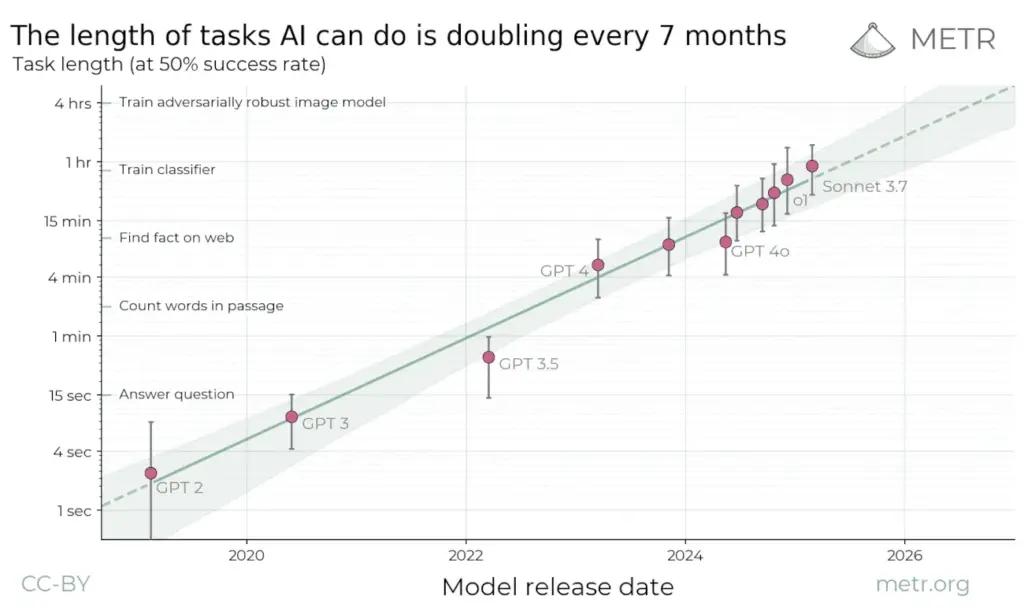
One important benchmark I keep an eye on is METR. Specifically, I watch the graph that analyzes how long AI models can perform a task autonomously (measured by the time it would take a human to do it). The graph with 50% reliability has doubled about every 7 months for the past 6 years.
Capacity gap
Today’s AI tools are already powerful enough to transform the way we work today. I notice this myself in my work as an innovation expert, strategic foresight expert and futurist.
But companies and organizations cannot keep up with the pace of this progress. This is also shown in research by McKinsey:
Only 1% of organizations have fully integrated AI into work processes.
This is the capability gap: the difference between what AI can do and how well organizations make use of it.1 Not surprisingly, 99% of attempts fail, for a number of reasons:
- First, it takes time to learn the new capabilities of AI.
- Second, AI is complex. It’s not like a company installs some new software to process invoices and then everything goes automatically. AI touches all processes and roles within an organization, so a lot has to be set up for it to work properly.
- The third is reliability. In certain tasks, such as health care or legal matters, the margin of error is small. If you don’t trust the output of an AI tool, you won’t dare fully integrate it either.
Closing the gap
So how can you as a company close this gap?
The most important tip is to use AI to transform processes. Don’t adapt the current way of working to AI, but see AI as fundamental change. From AI’s capabilities, rebuild work processes.
This is a concrete example I gave during a lecture on financial administration at the Planning and Control Department of a large municipality:
- Old process: an annual budget cycle with Excel.
- New process: AI continuously maintains a real-time financial model. Managers talk to AI in plain language about what their decisions mean for the budget, and that is automatically factored into the model.
Such transformations demand quite a bit from organizations. Think about recognizing talent, both to attract and retain that talent, taking change management seriously and being willing to adjust their organizational structure.
Want to know more? In this video, I talk about what AI means for businesses and organizations:
How does data lead to digital twins and what is the role of quantum computing in this?
Quantum digital twins
Sensor technology is taking off. Let’s start with ourselves: according to estimates, about 600 million to a billion people worldwide measure their heart rate, steps and/or sleep quality.
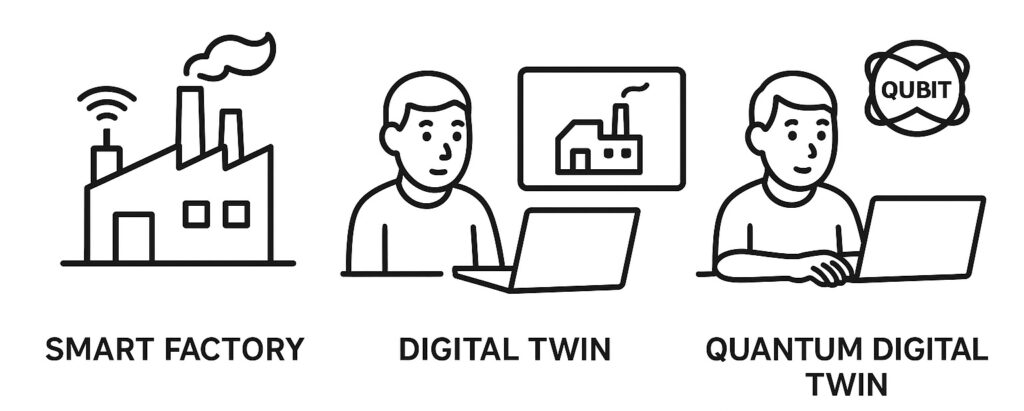
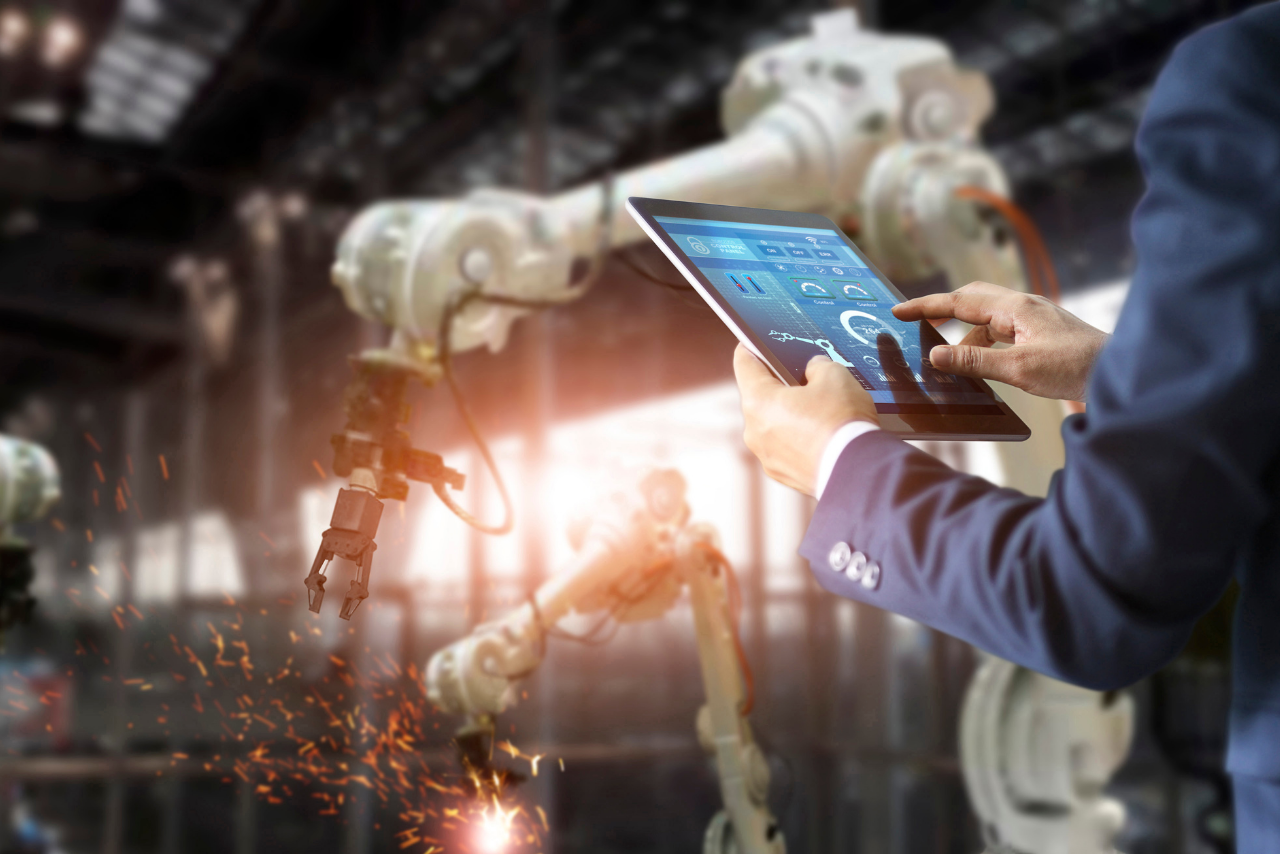
In industry, sensors have been commonplace for some time. Installations in factories increasingly have sensors that take all kinds of measurements. Smart systems analyze this data and construct a simulation of how the factory is doing. This concept is called a digital twin, a virtual twin.
With a digital twin, operators can better model, predict and control the production process. A well-known example is predictive maintenance: just before an equipment breaks down, a virtual twin can already notice it in a simulation.
Examples of digital twins
Some fascinating examples of digital twins:
- Rolls-Royce supplies aircraft engines to the U.S. Air Force. Predictive maintenance extends engine life by 30%.
- Jubilant Ingrevia, a chemical manufacturing company, states that they have 50% less downtimedue to virtual twins.
- More and more medical scientists are using it in their research. For example, Michelle Oyen applies it in her research on placental development.
With the increase in sensor technology and computing power with AI, I expect we will see digital twins in many more domains.
Quantum technology
Quantum is an umbrella term with a variety of underlying technologies and applications:
- Quantum communication makes it possible to exchange messages that cannot be overheard undetected.
- Quantum networks provide the connection between quantum computers. In 2025, such a connection was tested between The Hague and Delft.
- Quantum computers calculate not only with bits (0 or 1), but with qubits. Qubits can be both a 0 and a 1 at the same time. This makes it possible to calculate millions of times faster than current computers.
The enormous computing power of quantum computers makes them an interesting partner of digital twins. This is because these computers can compute through an extremely large number of variables, which improves the quality of simulations. For this reason, scientists in this paper propose the concept of quantum digital twins.
I look forward to seeing when we will see the first practical applications of this combination of sensor technology with digital twins and quantum computing.
What’s going on in materials science?
Materials Science
Materials science is about developing and improving the structure, properties and application of materials.
This field gets too little attention. Therefore, I also share a few interesting developments relevant to 2026 and beyond. These are:
- AI as a boost
- Nanotechnology
- Biosensors
AI as a boost
Artificial intelligence (AI) is also having an impact on materials science. Scientists at IBM and Microsoft used AI to research the best materials for energy storage in batteries.
Their model, the M3GNet framework, accelerated simulations of molecular dynamics to evaluate properties of materials. Consider, for example, how the material behaves at higher temperatures, how fast ions can move through the material and how long it takes for the material to wear down under friction. Scientists are already testing the first materials in the lab selected by the AI.
Nanotechnology
Nanotechnology is technology on the scale of size just above atoms and molecules (0.060 nm to 0.275 nm). To give you an idea, every five seconds your hair grows by 1 nanometer.
A cool Dutch startup in this field is VSParticle. They generate nanoparticles that scientists and companies can use to create new materials. So says Aike van Vugt, one of the founders:
‘We have only discovered 1 percent of all the materials we can make. That other 99 percent we will be able to make in the next one or two generations.’
VSParticle’s nanoprinters allow factories to discover and scale up new materials much faster. Those materials, in turn, make for better solar collectors, batteries and sensors.
Biosensors
Biosensors are an application that lies at the intersection of biotechnology and materials science.
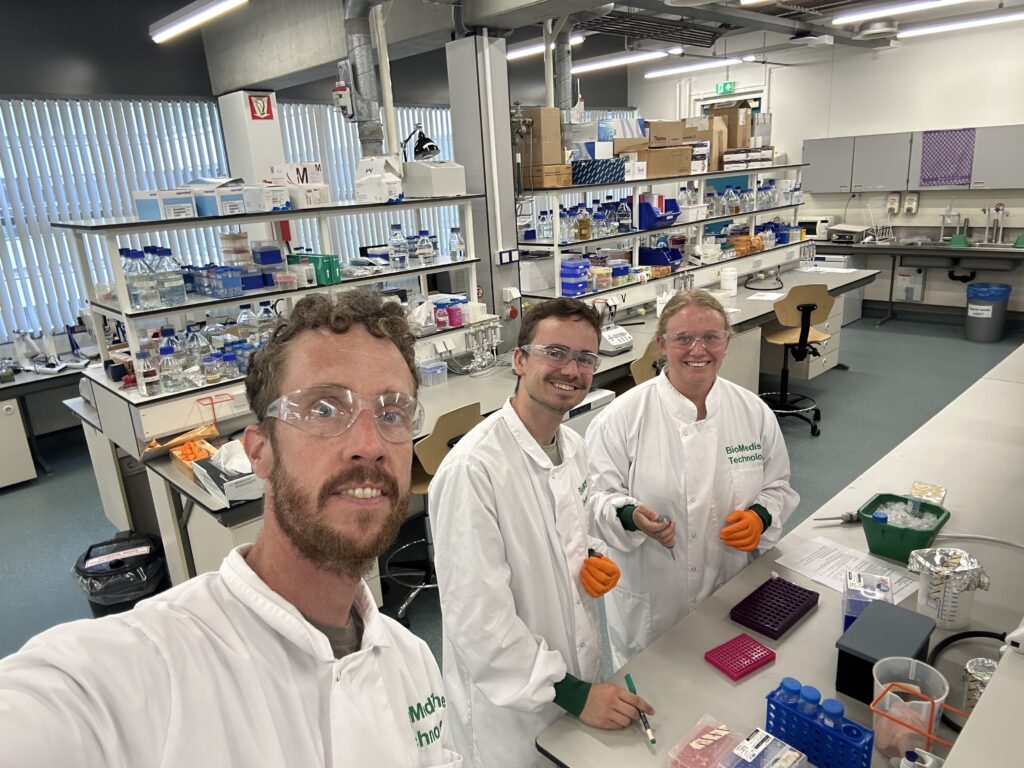
Last summer I visited the Biomechnical Engineering lab at TU Eindhoven with Joep and Tessa. They are participating in the iGEM Competition with the project: making proteins that change color as soon as they recognize a specific substance.
Applications that may lie ahead include in water quality testing, bacteria detection in food or medical diagnostics.
If you would like to hire me for a lecture or presentation on this topic, please contact me. Or check out the Trends 2040 page first for more information, examples and references.





Leave A Comment